Roof Algae and Black Streaks: Causes and Cleaning
Roof algae and black streaks are the most common roof complaint in South Florida, and they are widely misunderstood. Those dark streaks running down your shingles or tile are not dirt, not roof wear and not a sign the roof has reached the end of its life. They are living colonies of algae that feed, spread and, if ignored, slowly damage the roof surface. This guide explains what the streaks actually are, why Florida roofs grow them so readily, the harm they cause, and how roof algae and black streaks are properly cleaned and kept from coming back quickly.
Roof Algae and Black Streaks | Shore Roof Cleaning
What Black Streaks Actually Are
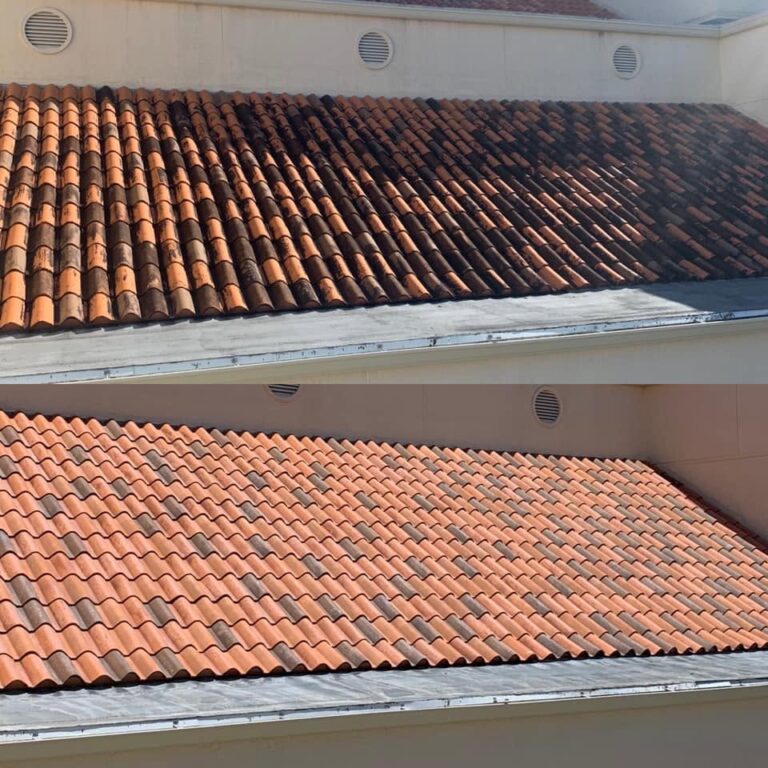
The black streaks are colonies of Gloeocapsa magma, a type of blue-green algae that travels as airborne spores and lands on roofs everywhere. On asphalt shingles it feeds on the limestone filler used in the shingle, which is why streaks appear even on relatively young roofs. The dark color is a protective pigment the algae produces against sunlight, and it is why the streaks look almost like soot or staining from above.
On tile roofs the same organism, along with other algae and mildew, grows in the moisture held by the porous surface and shows as dark streaking and a general gray-black film. Either way, if you can see streaks, you are looking at an established colony, not the beginning of one. Our related guide on how to remove mold from your roof covers the mold side of the same problem.
Why Algae Thrives on South Florida Roofs
Algae needs three things: moisture, warmth and food. South Florida supplies all three without a break. Humidity keeps roof surfaces damp, summer rain rewets them daily, temperatures stay in the growth zone all year, and there is no winter freeze to kill colonies back. Shaded slopes and areas under trees stay wet longest, which is why streaks start there.
Once a few colonies establish, they spread by spores washing down the slope with each rain, which is why streaks literally run downhill. A neighborhood effect follows: spores travel between nearby roofs, so one badly streaked roof raises the odds for its neighbors.
The Damage Algae Does Over Time
Algae is not just ugly. On shingles, feeding colonies erode the limestone filler and loosen the granules that shield the asphalt from ultraviolet light, shortening the roof’s working life. On tile, growth in the pores holds moisture against the surface and can work into the tile over years of neglect, dulling and weakening the finish.
There is also a heat cost. A blackened roof absorbs significantly more solar heat than a clean one, which in South Florida translates into a hotter attic and an air conditioner that runs longer. And because the growth holds moisture, it creates a foothold for moss and lichen, which are harder on the roof still. Regular roof cleaning stops the cycle before any of this becomes expensive.
How Algae and Black Streaks Are Cleaned
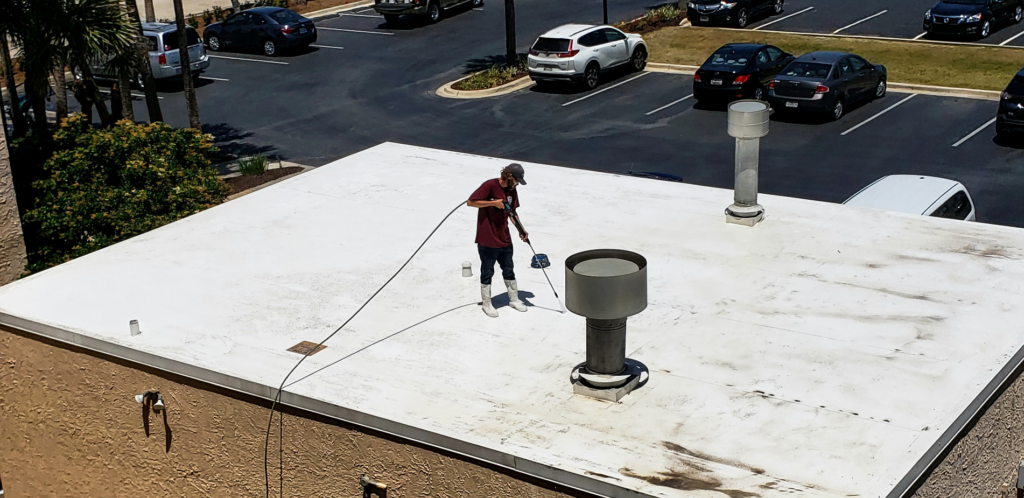
The correct cleaning method is soft washing: a roof-safe cleaning solution applied at low pressure that kills the algae through the full depth of the colony, followed by a gentle rinse. Killing the organism matters. A pressure rinse alone shears off the visible layer and leaves living roots and spores in place, which is why pressure-washed roofs often re-streak within a season.
The solution also needs dwell time to work, and the property needs protection: plants covered or pre-wet, and everything rinsed down afterward. This is the process described step by step in our soft wash roof cleaning guide. Stubborn, long-neglected areas may need a second application rather than more pressure.
Slowing Regrowth After Cleaning
A treated roof in South Florida typically stays clean two to three years. You can stretch that by trimming branches back so the roof dries faster, aiming sprinklers away from the roof edge, and keeping valleys and gutters clear of the leaf litter that holds moisture and feeds new colonies.
Some homeowners also ask about algae-resistant shingles when they eventually re-roof; those use copper or zinc granules that inhibit growth. For an existing roof, the practical answer is a cleaning cycle. If you are in our home area, our roof cleaning in Boca Raton guide lists the local signs to watch for between cleanings.
Frequently Asked Questions
Are black streaks a sign my roof is failing?
No. Black streaks are algae growth on the surface, not structural failure. They do shorten a shingle roof’s life if ignored for years, but a sound roof with streaks needs cleaning, not replacement.
Can I remove black streaks myself with a pressure washer?
That is the one method to avoid. High pressure strips shingle granules and can crack tile, and it leaves algae roots alive, so streaks return quickly. Soft washing removes the growth safely and completely.
Why do the streaks only appear on one side of my roof?
The shaded, slower-drying slope, usually the north-facing one or the side under trees, stays moist longest, so colonies establish there first. Given time, spores wash and spread to other slopes.
Will cleaning remove all the staining?
In most cases the streaks and film come off completely. Roofs that have carried heavy growth for many years can retain some faint shadowing on porous surfaces, which your crew should set expectations about before starting.
Request a Free Estimate
If black streaks are taking over your roof, a soft wash cleaning removes them at the root and brings back the color underneath. Call Shore Roof Cleaning at (561) 331-9600 or request your free estimate online.