Tile Roof Cleaning in South Florida
Tile roof cleaning is a fact of life for South Florida homeowners. Barrel and flat tile roofs define the look of neighborhoods from Boca Raton to Fort Lauderdale, but the same climate that makes this region beautiful also coats those tiles in algae, mildew and a gray-black film that hides their color. Cleaning tile correctly matters, because tile is durable but not indestructible: the wrong method can crack tiles and force water underneath them. This guide covers why tile roofs get dirty here, how they should be cleaned, and how often to schedule it.
Tile Roof Cleaning in South Florida | Shore Roof Cleaning
Why Tile Roofs Get Dirty in South Florida
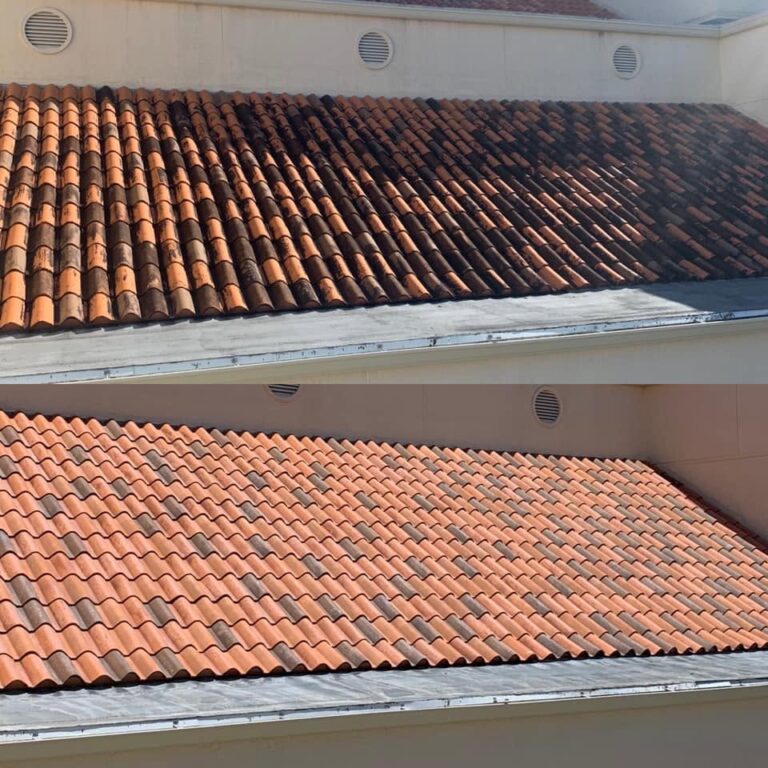
Concrete and clay tiles are porous. Their surfaces hold moisture, and in a climate with high humidity, daily summer rain and year-round warmth, that moisture feeds algae, mold and lichen continuously. The growth starts in the shaded laps and valleys of the roof and spreads until the whole surface darkens.
You will usually see it first as black streaking on the slopes that face north or sit under trees, then as a general dulling of the tile color. Because a tile roof is a major visual feature of the home, the change is obvious from the street long before the roof is in any structural trouble. Regular roof cleaning keeps the growth from ever getting established.
Barrel Tile, Flat Tile, Clay and Concrete: What Is Up There
Most South Florida tile roofs are either barrel tile, with its classic half-round profile, or flat tile with a cleaner modern line. The material is usually concrete, which is heavier and more porous, or clay, which is denser and holds its color differently. Both collect algae the same way, and both need the same gentle approach to cleaning.
The weak points are the tile edges and the mortar and foam joints that seal the ridges. Age and foot traffic can chip edges, and a careless cleaning that blasts those joints with high pressure can open paths for water. Knowing what is on your roof is the first step to cleaning it safely.
Why High Pressure Is the Wrong Tool for Tile
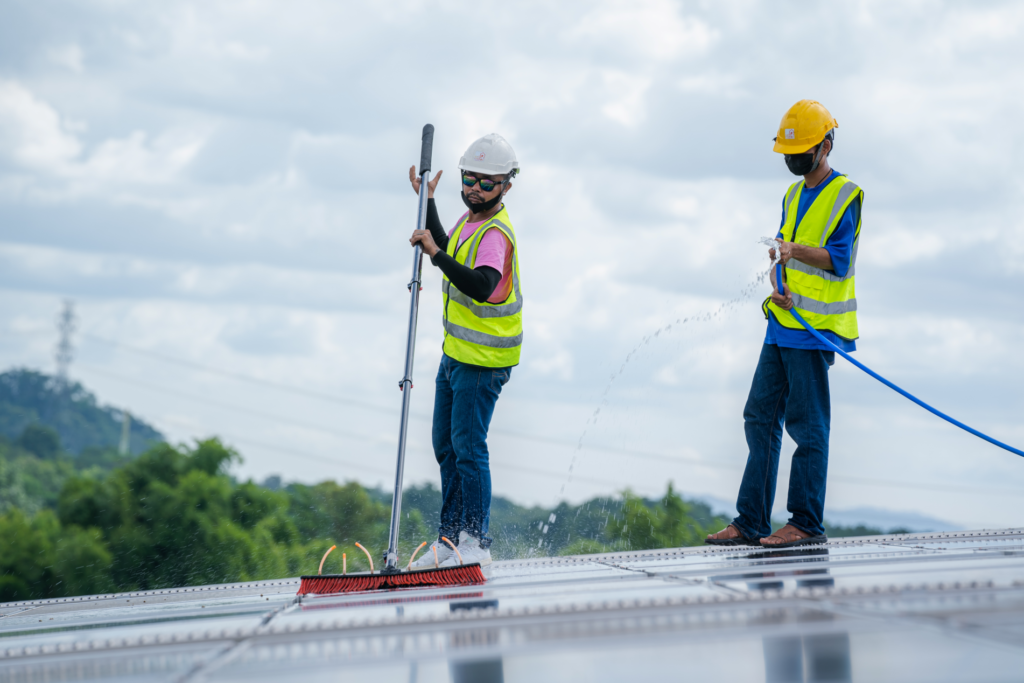
It is tempting to think a pressure washer will make short work of a dirty tile roof. In practice it causes three problems. First, the jet can crack tiles outright, especially older concrete tile that has become brittle. Second, it strips the surface layer and color from the tile, leaving it more porous and quicker to re-stain. Third, it drives water up and under the tiles, where it can reach the underlayment that actually waterproofs your roof.
Every cracked tile then has to be found and replaced, and matching decades-old tile color is rarely perfect. The cost of repairing pressure damage easily exceeds the cost of cleaning the roof correctly in the first place.
The Soft Wash Approach for Tile Roofs
Tile roofs should be soft washed: a cleaning solution applied at low pressure that kills algae, mold and lichen at the root, followed by a gentle rinse. The solution loosens the growth’s grip on the porous tile surface, so no force is needed to remove it. Colors come back because the film covering them is gone, not because the surface was scoured.
Soft washing also treats the laps and valleys where growth hides and where a pressure jet cannot reach without damage. The method is the same one we use for roof cleaning in Boca Raton, where barrel tile is the dominant roof style. For the organisms being removed, see our guide to roof algae and black streaks.
How Often Tile Roofs Need Cleaning Here
Most South Florida tile roofs need cleaning every two to three years. Shaded roofs under mature oaks, roofs near lakes and canals that hold morning moisture, and roofs that catch irrigation overspray may need it closer to every two years. Many communities and HOAs in the area also expect roofs to be maintained free of visible staining, so waiting for a notice letter is not a strategy.
A practical approach is to look at the roof each year at the start of summer. If you can see streaks from the street, it is time. Booking before the heaviest rains also means the crew can clear valley debris while they are up there.
Frequently Asked Questions
Can you walk on a tile roof to clean it?
Tile can crack underfoot, so experienced crews minimize walking, use the roof’s strong points when access is needed, and do much of the application from ladders and the roof edge. It is one reason tile cleaning is a job for specialists rather than a weekend rental.
Will cleaning restore my tile’s original color?
In most cases, yes. The gray-black layer is growth and film sitting on the tile, not the tile fading. Once it is removed and rinsed, the original color shows again. Very old tiles may have some permanent weathering, which your crew can point out honestly.
Does tile roof cleaning include the gutters and valleys?
A proper cleaning clears loose debris from valleys and roof edges as part of preparation, since debris holds moisture and feeds growth. Gutter cleaning inside the gutter run is a separate task you can ask about when booking.
Is soft washing safe for clay tile?
Yes. Clay tile is cleaned with the same low-pressure soft wash method as concrete tile. The solution does the work, so neither material is exposed to damaging pressure.
Request a Free Estimate
If your tile roof has lost its color to algae and film, a soft wash cleaning can bring it back without risking the tiles. Call Shore Roof Cleaning at (561) 331-9600 or request your free estimate online.